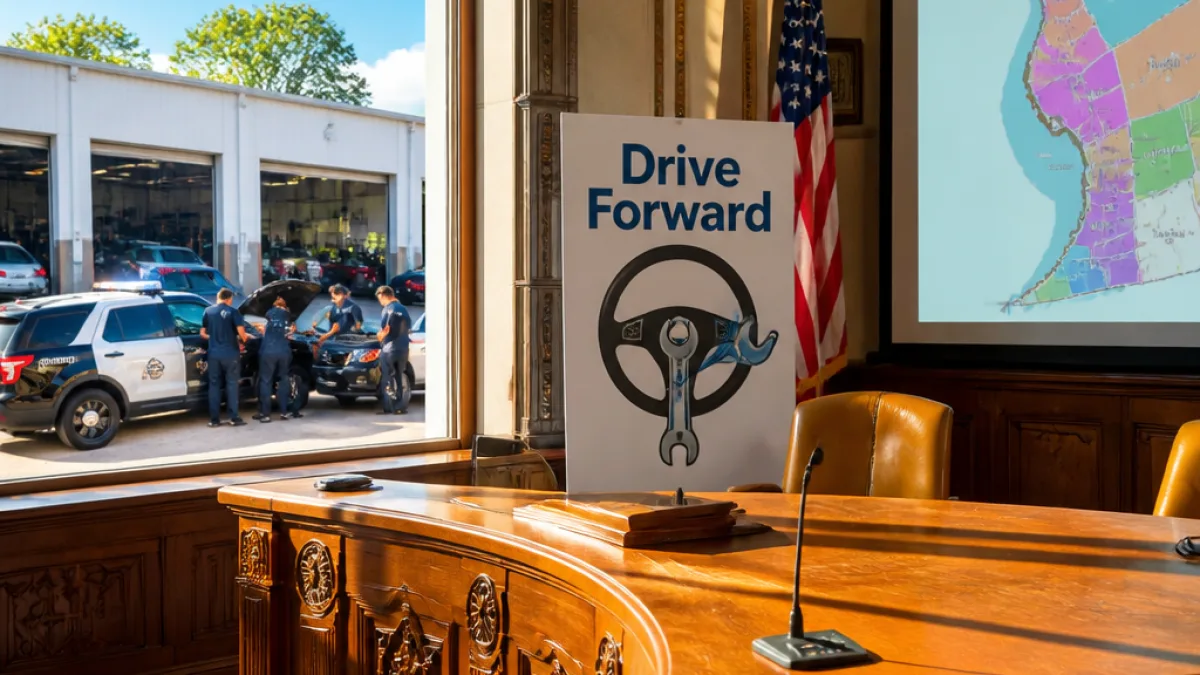
The Buffalo Common Council is weighing a novel approach to a persistent local problem: youth-involved vehicle thefts. Councilwoman Zeneta Everhart of the Masten District, in partnership with Councilman Rasheed N.C. Wyatt, advanced the Drive Forward Initiative, a diversion plan that would channel first-time juvenile car theft offenders into automotive education and workforce training instead of, or alongside, traditional punishments.
What the proposal would do
Backed by initial committee support in late July 2026, the plan seeks to connect eligible youths with hands-on instruction and career pathways through partners such as the Northland Workforce Training Center, local dealerships and manufacturers. The stated goal is pragmatic: turn the mechanical aptitude some teens display while stealing vehicles into legitimate employment, while still holding them accountable for criminal behavior.
- Target group: first-time juvenile offenders caught stealing cars.
- Program components: vehicle repair instruction, apprenticeship opportunities, workplace skills.
- Partners mentioned: Northland Workforce Training Center, local dealerships, manufacturers.
- Timeline: potential participant intake around late 2027, if finalized.
Local context and why the city is acting
Everhart has argued the rise in youth car thefts is driven in part by social media influences rather than strictly by economic need. Officials say the initiative would seek to redirect that behavior toward training and employment rather than excuse it. City leaders are proposing the program even as overall vehicle theft numbers in Buffalo have fallen from earlier peaks — a point that complicates the policy conversation about where resources are best deployed.
“The plan would convert mechanical aptitude some teens already display while stealing cars into legitimate career paths,” the proposal summary says.
Unresolved pieces and interagency coordination
Key details remain unfinished. The initiative requires coordination with the Buffalo Police Department and the Erie County District Attorney’s office, and those conversations were still pending. Officials say, if approved and properly staffed, the program could begin accepting participants around late 2027 — more than a year away.
| Item | Current status |
|---|---|
| Committee approval | Initial support (late July 2026) |
| Partner commitments | Named partners under consideration; details incomplete |
| Interagency sign-off | Coordination with BPD and Erie County DA required |
| Projected start | Potential intake around late 2027 |
Support and skepticism
Supporters frame the initiative as a second-chance tool that puts demonstrated skills to productive use, creating career paths and reducing recidivism by offering alternatives to incarceration or juvenile adjudication. They argue hands-on, employer-linked training could be a practical way to disrupt a cycle that starts with thrill-seeking behavior captured on social platforms.
But the plan has clear skeptics. Critics of similar diversion programs nationally question: Why focus on first-time offenders when repeat juvenile offenders are common? Will teens drawn to online thrills swap viral notoriety for shop class? And will a program that may not begin enrolling participants until late 2027 move quickly enough to address current surges?
Those questions echo in Buffalo, where residents and public-safety officials must weigh long-term prevention strategies against immediate enforcement needs. The initiative’s supporters say the program need not be a replacement for traditional policing and prosecution, but an additional tool in the city’s toolbox.
The Drive Forward Initiative represents a policy bet: that channeling an illicit skill into legitimate work can produce safer streets and stronger entry-level employment pipelines. Whether that bet pays off for Buffalo families, dealerships and the criminal-justice system will depend on the details still to come — and on whether the city can marshal partners, funding and timely implementation before the problem evolves again.