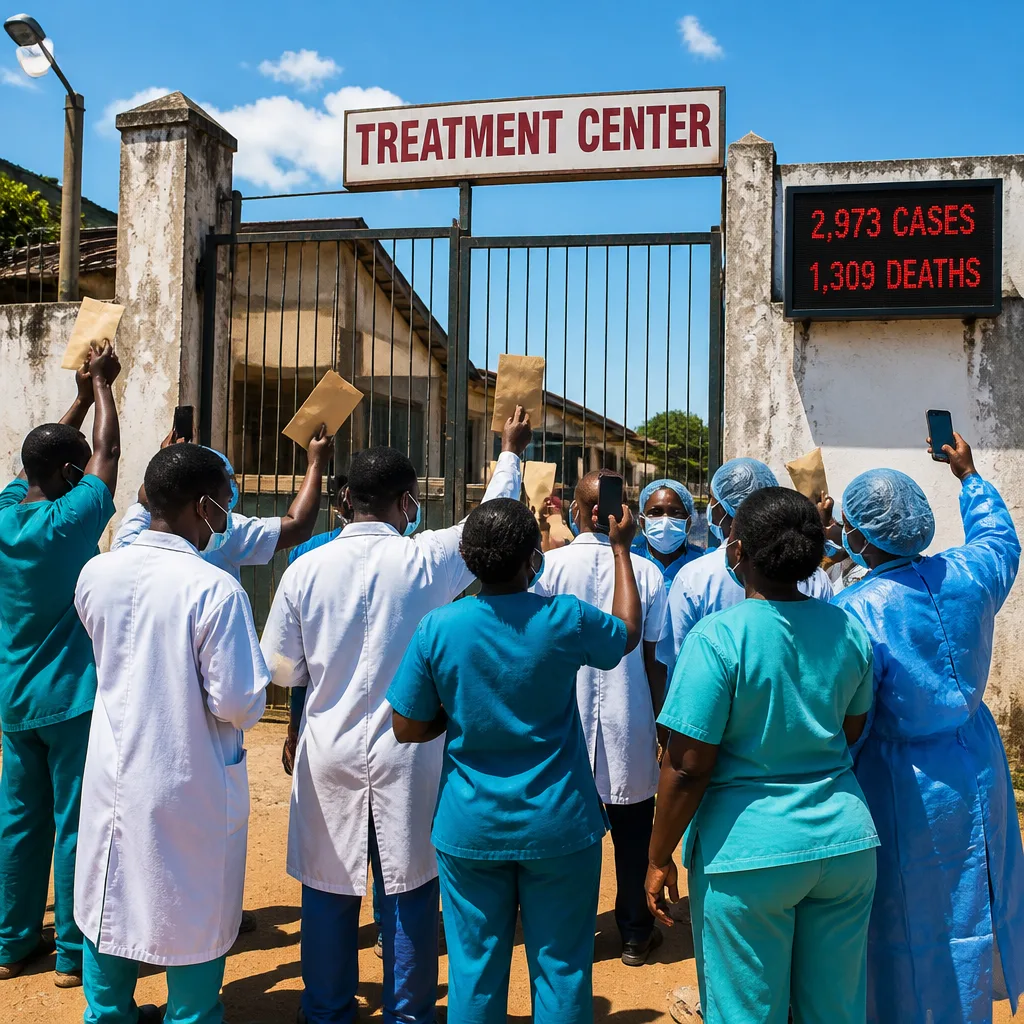
BUNIA, Congo — Health workers at an Ebola treatment facility in eastern Congo stopped work Saturday to demand overdue pay, bringing operations at a principal treatment center in the outbreak’s epicenter to a halt as government data show rising cases and deaths.
The walkout at the Elikya Ebola Treatment Center in Bunia, Ituri province, came as Congolese authorities reported 2,973 confirmed Ebola cases and 1,309 deaths, figures officials described as reflecting the fastest-growing outbreak on record. Doctors, nurses and security staff joined a demonstration of roughly a hundred people outside the facility, saying unpaid performance bonuses had eroded morale and hindered patient care.
“We need to be paid, because in the meantime the disease is spreading at the treatment center,” said Martin Bolombi, one of the workers on strike. “I’ve already had five people die who are still inside there. A solution must be found for us.”
Staff demand back pay as services pause
Staff at Elikya said they had voted unanimously to remain on strike until authorities offered what they called concrete solutions to resolve two months of unpaid performance bonuses. The stoppage followed another recent strike at Bunia General Hospital, the largest medical facility in the region, where some employees reported they had not received any pay since they began work on the outbreak response.
Officials overseeing the response said the payment problem was being addressed. Dr. Adelard Lufungula, operations manager for the Ebola response, told reporters the authorities had shifted payments from cash to mobile money and expected to clear the backlog in the coming days.
Wider strain on response and health personnel
The World Health Organization has reported more than 100 health care workers infected since the outbreak began, an indicator of the risks facing frontline staff and the potential consequences of any reduction in treatment capacity. Health worker infections and labor disputes can slow case identification, isolation and treatment — measures central to controlling Ebola transmission.
The strike occurred one day after Prime Minister Judith Suminwa visited Ituri, touring treatment hubs in Rwampara and Mongbwalu to assess the response. In Mongbwalu, she faced urgent demands from health personnel protesting payment issues.
| Measure | Reported figure |
|---|---|
| Confirmed Ebola cases | 2,973 |
| Deaths | 1,309 |
| Infected health care workers (WHO) | More than 100 |
Public health experts regard continuous staffing and timely compensation as vital to sustaining outbreak operations. Delays in payments can trigger walkouts, impede infection prevention measures and worsen patient outcomes — a concern underscored by striking staff reporting multiple deaths among inpatients during the work stoppage.
- Immediate demand: clearance of two months of unpaid performance bonuses.
- Operational impact: treatment center services suspended, patient care disrupted.
- Broader risk: more than 100 health workers infected, illustrating exposure and potential staffing shortages.
Authorities said the change to mobile-money payments should resolve the backlog. How quickly payments are delivered and whether striking staff return to duty will affect the speed and effectiveness of the response in Ituri, a province at the heart of the outbreak.
As the outbreak continues to expand, maintaining the trust and capacity of frontline teams remains a central challenge for Congolese officials and international partners involved in the response. Restoring consistent pay and addressing workforce grievances will be key to keeping treatment centers operational and preventing further disease spread.