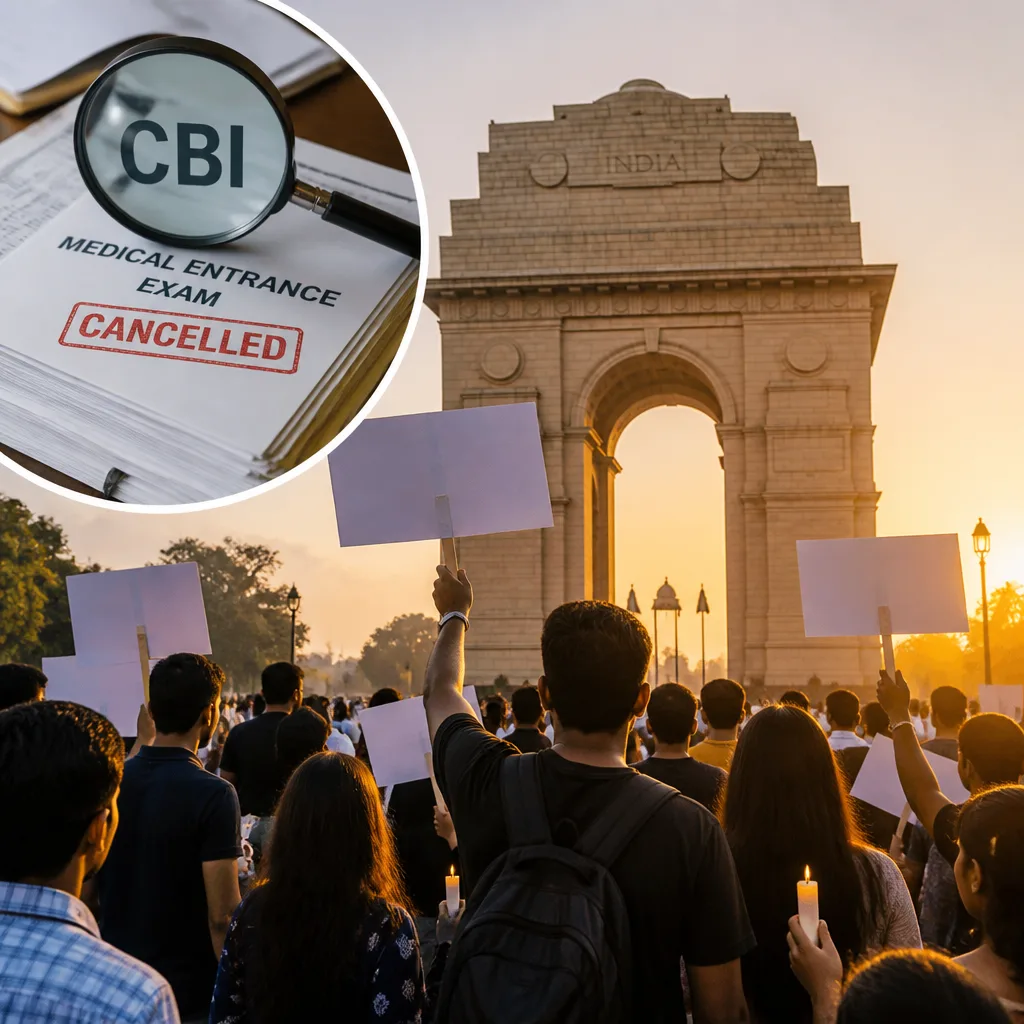
India’s education minister, Dharmendra Pradhan, resigned Saturday following weeks of nationwide student protests accusing officials of failing to stop alleged leaks of highly competitive medical school entrance examinations. Tens of thousands of demonstrators rallied in New Delhi and other cities after reports that exam questions had been sold to certain students, forcing millions to retake the tests.
What led to the resignation
The protests were driven in part by a youth movement known as the Cockroach Janta Party, founded by Boston University graduate Abhijeet Dipke. The group grew quickly through viral social media outreach and has demanded both Pradhan’s removal and compensation for families of students who took their own lives after being affected by the scandal. Organizers said they began mass demonstrations in May.
In his resignation announcement, Pradhan acknowledged that "irregularities were found" in the entrance exam process and said he stepped down to ensure that "anti-national forces do not take advantage of this situation" and to preserve "national unity." The government said it had "immediately took cognizance of the matter, handed over the investigation to the CBI, canceled the examination, and announced a date for the re-examination."
"The government of India immediately took cognizance of the matter, handed over the investigation to the CBI, canceled the examination, and announced a date for the re-examination," the announcement said.
Actions taken and outstanding questions
Authorities have moved to investigate and to cancel the contested exam, but the events have already had tangible consequences for students and families. The public outcry reflects broader anxieties about access to professional degrees in a country where medical seats are limited and competition is intense.
- Investigation: The case has been handed to the Central Bureau of Investigation (CBI).
- Exam canceled: Officials announced the cancellation of the contested medical entrance test and set a new date for re-administration.
- Public pressure: Student mobilization led by the Cockroach Janta Party played a central role in escalating the political pressure on the education ministry.
| Response | Action taken |
|---|---|
| Investigation | Referred to CBI |
| Exam status | Cancelled; re-examination scheduled |
| Political outcome | Education minister resigned |
What this means for students
For applicants who prepared for months or years, cancellation of a high-stakes test represents both an administrative reset and a personal setback. Millions of candidates contend with an education system where few seats exist relative to demand; allegations that some gained access to exam content exacerbate existing inequities and can undermine trust in institutions charged with impartial assessment.
Organizers of the demonstrations pointed to tragic outcomes that have accompanied the scandal. The Cockroach Janta Party has called for compensation for families of students who committed suicide after being affected by the alleged leak. Those claims were central to the movement’s calls for accountability.
The resignation is an uncommon concession by Prime Minister Narendra Modi’s government to sustained public protest. It underscores how academic grievances can intersect with broader political fault lines, from youth unemployment to perceptions of systemic unfairness.
Broader implications and next steps
Officials have pledged further scrutiny of the exam process, but many questions remain about how the alleged leaks occurred, who benefited, and what systemic reforms are needed to prevent a recurrence. The CBI investigation will be watched closely by students, universities and international observers interested in the integrity of admissions systems.
How the re-examination is administered — including timing, security measures and support for affected students — will shape whether confidence can be restored. For now, the immediate political consequence is clear: a minister has stepped down amid a student movement that has made examination integrity a matter of national concern.
For the students whose futures hinge on a single test, the coming weeks will determine not only admissions outcomes but also whether the system that evaluates them can be trusted.