Students can leave a classroom with facts about Israel yet feel no lasting bond to the place those facts describe. That gap — between acquiring information and developing a sense of personal connection — frames a growing debate over how Israel should be taught to young Jews in schools and youth programs.
Two educational logics
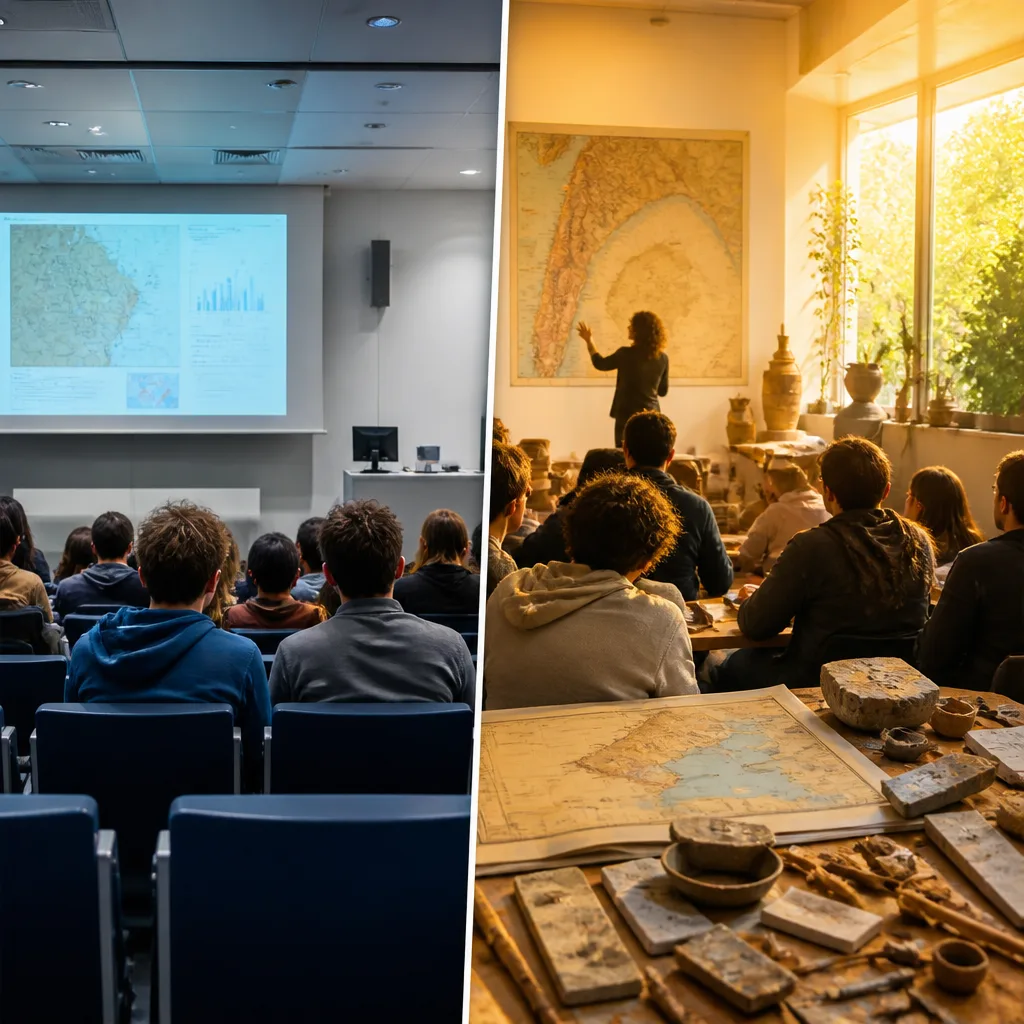
One approach, rooted in university-style scholarship, treats Israel as an object of study. Courses break down political dynamics, demographics, economic trends and security issues into evidence-based lectures and footnoted analysis. The priority is intellectual rigor, balance and critical distance.
The other approach is intentionally transformative. Programs that describe themselves as "Israel education" aim to move beyond conveying facts to shaping identity: they ask how a lesson should feel inside a student, whether it stirs pride, a sense of responsibility or a personal connection to the land and history.
- Academic instruction emphasizes objectivity, peer-reviewed research and the skills of analysis.
- Israel education centers on lived experience — visits to historical sites, narratives that link past and present, and activities designed to cultivate belonging.
What students experience
In seminar rooms at higher education institutions, the 1948 war or other pivotal events are often treated as cases to be weighed, critiqued and placed within competing legal and historical narratives. In contrast, youth movement seminars and gap-year programs frequently use place-based learning: standing on a ridge near Latrun or walking the Old City’s alleys so history is not only studied but physically encountered.
Those who favor experiential methods argue that physical encounters with sites and stories help students internalize meaning in ways that detached analysis rarely achieves. The intent is explicit: to make Israel feel less like an abstract policy issue and more like a personal chapter of one’s own story.
Implications for continuity and citizenship
The debate reaches beyond pedagogy to questions of communal survival and civic formation. If a generation grows adept at debating metrics and maps but does not develop attachment or responsibility, teachers and community leaders warn that Jewish continuity may erode even as knowledge increases.
Conversely, critics of emotionally driven education caution that minimizing critical distance can narrow students’ capacity to evaluate complex realities. They argue that passion without critical tools risks producing uncritical allegiance rather than informed commitment.
Both perspectives, as framed in current discussions, acknowledge that the stakes are not purely academic: they concern identity, future civic engagement and how young people relate to a contested national story.
How this lands on students
For a young person making choices about study-abroad programs, youth movements or university majors, the distinction matters practically. Will their time in a classroom or on a ridge provide them with analytical skills to navigate public debate, or will it cultivate a lived attachment that shapes moral choices and communal participation? Many programs now try to blend the two, though tension remains over emphasis and methods.
This conversation also points to a broader educational question: how should schools balance the transmission of knowledge with formation of values? The Israel case sharpens that question because it involves history, faith, national narratives and ongoing political conflict — all elements that make the educational stakes unusually high.
As community leaders and educators continue to design curricula and programs, the central challenge persists: ensuring that students are not merely equipped with arguments, but also with the inner convictions and responsibilities that turn knowledge into sustained engagement.