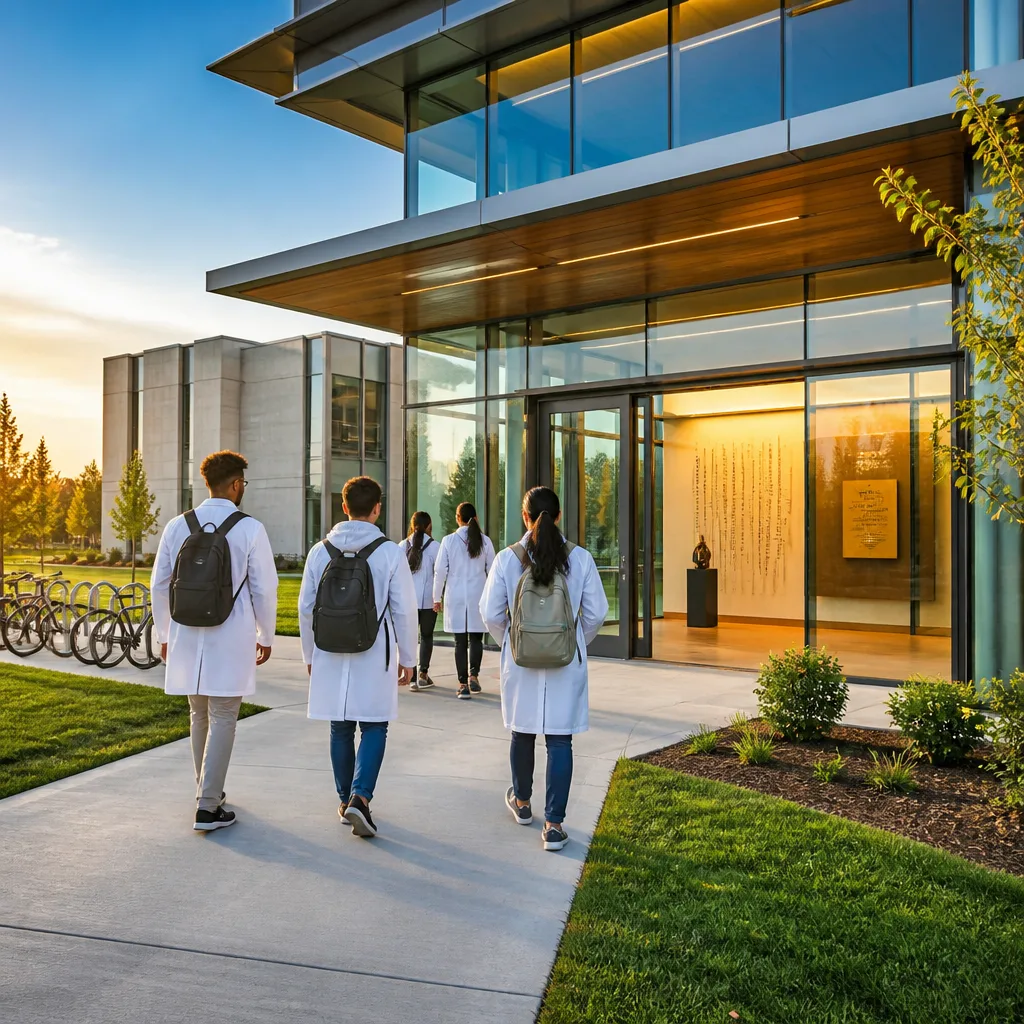
Less than a decade after an unlikely proposal reached Beijing, a slim, graduate-focused campus on the outskirts of Hangzhou has emerged as a test case for a new kind of Chinese research university. Westlake University was conceived by a group of senior scientists and launched with private money and an explicit aim: build a university shaped by researchers, not ministries.
From proposal to accredited university in three years
The idea began as a formal submission to the state on March 11, 2015, when seven established scholars argued that China needed a different institutional model — one that was privately financed, shielded from heavy administrative control, and organized around scientific merit rather than bureaucratic rank. The government approved the plan, and within eighteen months the Zhejiang Westlake Institute for Advanced Study opened near West Lake in Hangzhou, supported by donations from business leaders. The institute took its first 19 doctoral students in 2016.
They proposed a university that would be "privately funded, independent of heavy administrative control, and built around scientific merit rather than bureaucratic hierarchy."
On Feb. 14, 2018, the Ministry of Education granted formal accreditation, making Westlake the first modern Chinese university established under this new, private research model. Its founding president, structural biologist Shi Yigong, who left a tenured career in the U.S. and later a leadership post at Tsinghua University, has been a driving force behind the enterprise.
Why the experiment matters
Westlake’s rapid ascent matters for several reasons. For decades, China’s top universities grew from state institutions or long-standing academies. Westlake breaks that pattern in three ways:
- Funding structure: major reliance on private donations rather than direct ministry budgets.
- Governance: emphasis on faculty autonomy and merit-based recruitment instead of traditional administrative hierarchies.
- Scale and focus: small, doctorate-centered cohorts intended to boost high-impact research rather than mass undergraduate enrollment.
Those differences have real consequences. A compact faculty and graduate population allow Westlake to be agile in recruiting internationally and investing in cutting-edge labs. Donor backing can translate into rapid capital expansion and hiring flexibility that state-run institutions often cannot match.
Results so far — and the limits of early success
Since opening, the university has gained attention for punching above its weight in research output and citations relative to its size. That performance has stoked debate about whether a privately financed, researcher-first approach can be scaled or replicated elsewhere in China and beyond.
But the model faces constraints. Private philanthropy in China is subject to political and regulatory boundaries, and donors’ priorities may shift. The long-term stability of a university that depends heavily on a narrow funding base is an open question. Moreover, institutional prestige in science is shaped not only by money and governance but also by networks, national research agendas, and the ability to train large cohorts of students — areas where established giants retain advantage.
| Date | Event |
|---|---|
| March 11, 2015 | Proposal submitted by seven scientists |
| Dec. 10, 2016 | Zhejiang Westlake Institute for Advanced Study inaugurated |
| 2016 | First cohort of 19 doctoral students admitted |
| Feb. 14, 2018 | Ministry of Education grants formal accreditation as Westlake University |
Observers also note leadership matters. Shi Yigong’s reputation and networks — cultivated abroad and at top Chinese institutions — helped attract talent and money. Whether similar leaders will arise to seed other private universities remains uncertain.
Implications for global science and higher education
If Westlake sustains high-impact research and continues to recruit global talent, it could reshape expectations about how research universities form and compete in China. For U.S. and European institutions, the experiment is a reminder that alternative governance and funding structures can produce rapid results, complicating assumptions about where scientific excellence originates.
But Westlake’s trajectory is also a cautionary tale: innovation in higher education requires more than initial gifts and marquee leaders. It needs durable governance, stable funding, and immunity from political shifts that could undercut the independence the founders sought to enshrine.
For now, Westlake remains a vivid demonstration that a small, faculty-first university can move quickly on the global research stage — and a living laboratory for what a different kind of university might look like in the 21st century.