
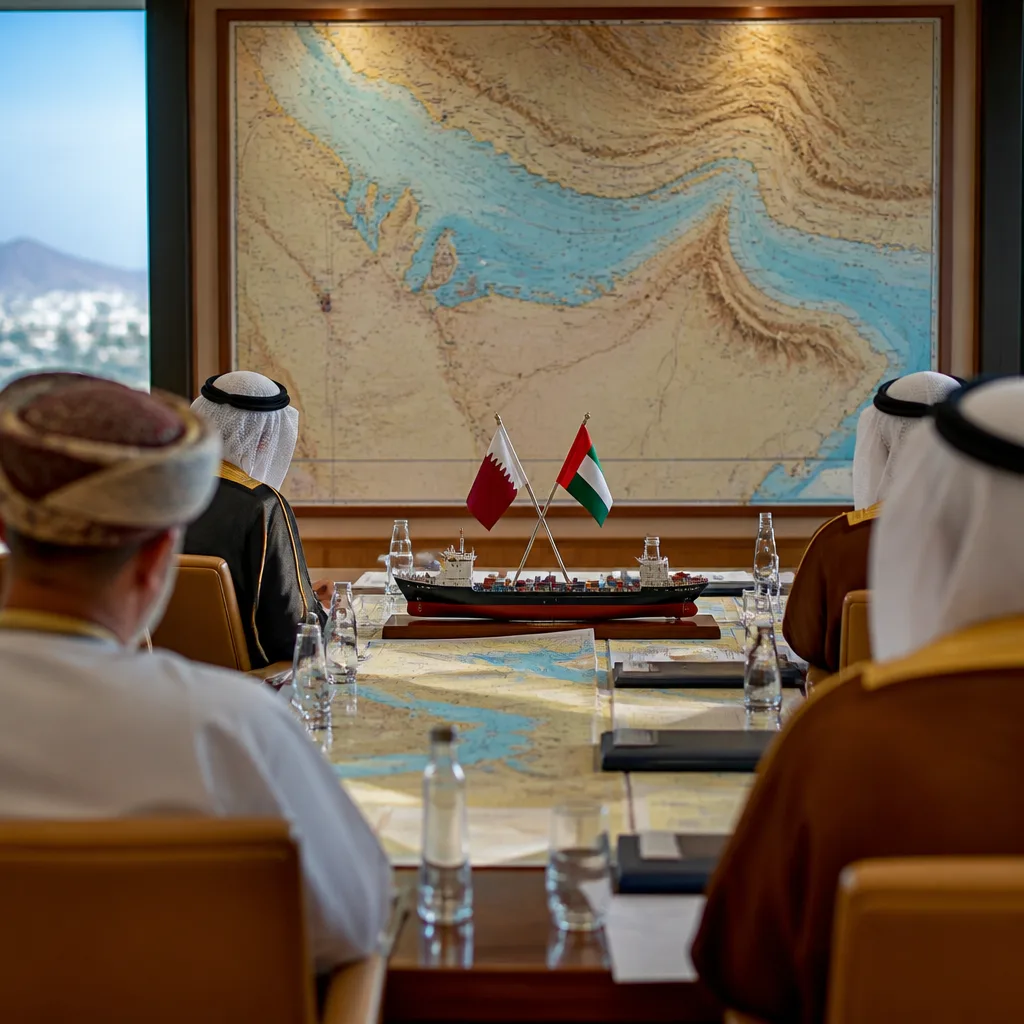
Tehran — Iranian officials said talks held with Omani counterparts over the weekend were focused on establishing a mechanism to manage shipping through the Strait of Hormuz and were not connected to the United States, framing the discussions as bilateral technical and political consultations.
What Iranian officials say
Esmaeil Baqaei, spokesman for Iran’s foreign ministry, told reporters Monday that several rounds of meetings took place on Friday and Saturday in Tehran at the level of deputy foreign ministers. He said those sessions exchanged views on common principles and operational mechanisms for the safe passage of ships while "respecting the sovereign rights" of the coastal states.
“These are talks between Iran and Oman. Several rounds of talks were held on Friday and Saturday, and there were useful talks about how to manage shipping traffic in the Strait of Hormuz,”
Baqaei added that the Omani delegation departed Tehran on Saturday afternoon but characterized the process as ongoing, with both "technical and political consultations" continuing between the two governments.
Claims about U.S. role and regional context
The Iranian spokesman said the situation in the strait remains affected by what he called "insecurity imposed by the US," and emphasized Tehran’s insistence that the discussions have no relation to Washington. That assertion underscores a recurring Iranian line that regional security arrangements should be devised without U.S. involvement.
For Washington and other international observers, any change in the management of traffic through the Strait of Hormuz — a chokepoint for a significant share of global oil and maritime trade — would be of immediate interest because of its potential to affect commercial shipping, naval operations and sanctions enforcement.
Participants, agenda and next steps
The talks were described by Tehran as deputy foreign minister-level exchanges. According to the ministry’s spokesman, the agenda focused on:
- Operational arrangements for safe navigation in the strait;
- Respect for sovereign rights of the coastal states (Iran and Oman);
- Ongoing technical and political consultations following the delegation’s departure.
Iran did not provide details on any specific proposal, timeline or confidence-building measures discussed during the meetings. Oman’s official account was not included in the statement released by Tehran.
| Item | Detail |
|---|---|
| Location | Tehran |
| Dates | Friday and Saturday (delegation left Saturday afternoon) |
| Participants | Deputy foreign ministers from Iran and Oman |
| Main focus | Mechanisms for safe shipping through the Strait of Hormuz |
Implications and open questions
The Iranian account raises several questions relevant to U.S. policymakers and commercial interests. First, whether bilateral arrangements between Iran and Oman would be compatible with existing international maritime law and with measures used by the U.S. Navy and allied navies to keep the corridor open. Second, whether any practical steps proposed would be acceptable to the global shipping industry and to nations that rely on the route for energy supplies.
Third, Tehran’s framing that U.S. actions are a source of insecurity in the strait is likely to be used domestically and regionally to justify attempting to write Iran into any new operational regime for the waterway. Washington has for years cited freedom of navigation as a core interest in the region; any perceived exclusion from talks over practical management of strait traffic would complicate that stance.
Baqaei’s comments did not disclose any formal agreement or timetable, leaving the next steps unclear beyond continued consultations. Observers will be watching for statements from Muscat and for concrete proposals that could be evaluated against international norms and the interests of third-party states that regularly transit the strait.