Governor frames budget increases as investment in recruitment and public safety
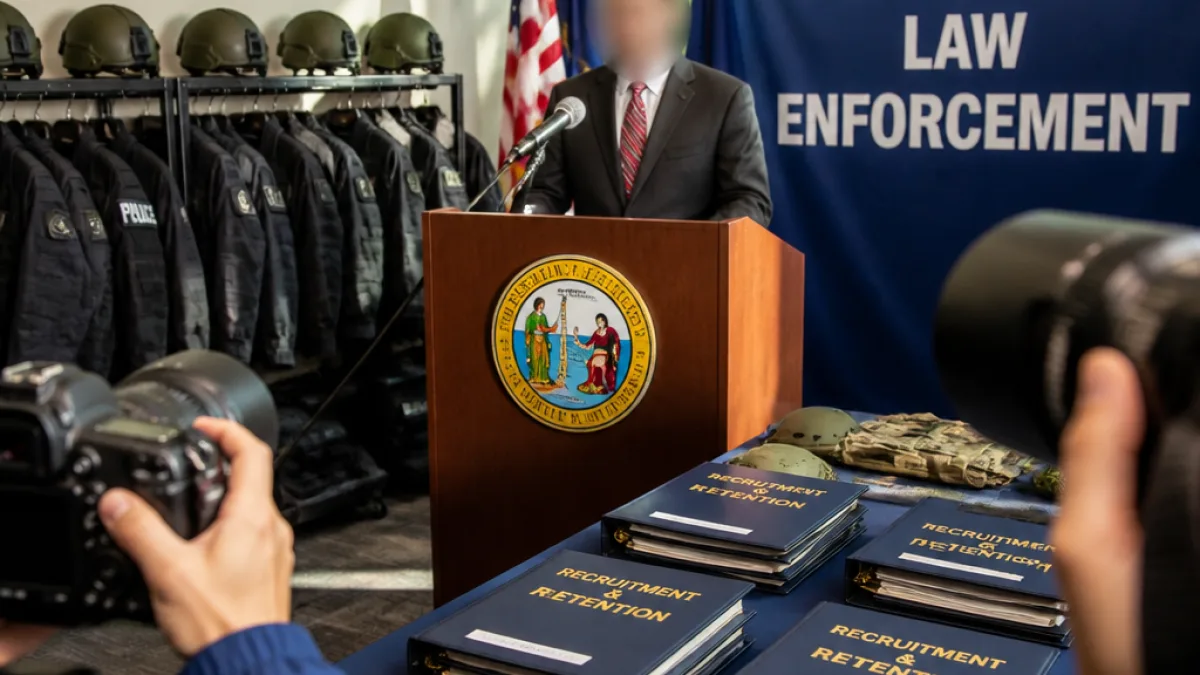
Gov. Josh Stein visited the Raleigh Police Department Special Operations Division on Thursday to highlight components of the recently passed state budget that increase pay and support for law-enforcement agencies. The visit underscored the administration’s emphasis on recruitment and retention at a moment when many departments nationally and locally report staffing pressures.
During remarks at the division, Stein described the budget measures as a clear statement of priorities. He said the state must do what it can to support officers and those considering law-enforcement careers, calling those jobs both demanding and essential.
“Law enforcement careers are demanding and sometimes dangerous, but they are so important and rewarding. We must do everything in our power to support those who keep North Carolinians safe,”
The governor also pointed to concrete pay adjustments enacted in the budget, saying they represent a historic investment in public safety. Those increases apply to multiple state law-enforcement agencies and are intended to make public-safety careers more competitive.
Local leaders welcome budget, emphasize recruitment
Raleigh Police Chief Rico Boyce welcomed the state’s action and expressed appreciation for the inclusion of local law enforcement in broader state support. In a prepared statement, the chief framed the funding as a meaningful investment in officers who serve Raleigh neighborhoods.
City departments have been candid about the challenges of recruiting and keeping trained personnel. The governor and the police chief both emphasized that salary increases and bonuses are part of a multi-pronged strategy to stabilize staffing levels and ease turnover.
How the budget breaks down
The governor cited specific pay raises for several state agencies that also affect the public-safety workforce broadly. Those figures were highlighted during his visit and are relevant context for how Raleigh might see indirect benefits in recruitment and statewide public-safety coordination.
| Agency | Pay raise |
|---|---|
| SBI and ALE (State Bureau of Investigation; Alcohol Law Enforcement) | 16.2% |
| State Highway Patrol | 15% |
| Correctional officers | 13% |
| Probation and parole | 6.5% |
City-level police pay is often influenced by state-level compensation trends, recruitment competition from neighboring jurisdictions, and municipal budget capacity. While the budget’s listed increases target specific state agencies, city departments say the broader signal of investment helps when persuading recruits to consider public-safety careers.
Questions about local impact and next steps
Officials did not outline immediate, department-specific raises for the Raleigh Police Department during the visit. What remains to be seen is how municipalities will leverage state-level investments to boost local recruitment and whether Raleigh’s budget will adopt complementary measures.
- Recruitment and retention: The governor emphasized pay increases as key to attracting and keeping officers.
- Local implementation: Raleigh leaders must still determine how to use state support alongside city budgeting to address staffing gaps.
- Public perception: Supporters say raises recognize public-safety demands; critics in other contexts have questioned whether pay alone addresses training, accountability and community relations.
The visit illustrates how state-level fiscal decisions intersect with local policing. For Raleigh residents, the practical consequences will depend on how the city pairs any new state signaling with its own recruitment strategies, overtime management and community-policing priorities. As departments nationwide struggle with staffing, the state’s approach is likely to intensify discussion here about the balance between compensation, training, and long-term public-safety outcomes.
Officials at the Raleigh Police Department and the governor’s office said they would continue conversations around implementation and how to translate budget increases into durable staffing and public-safety improvements.