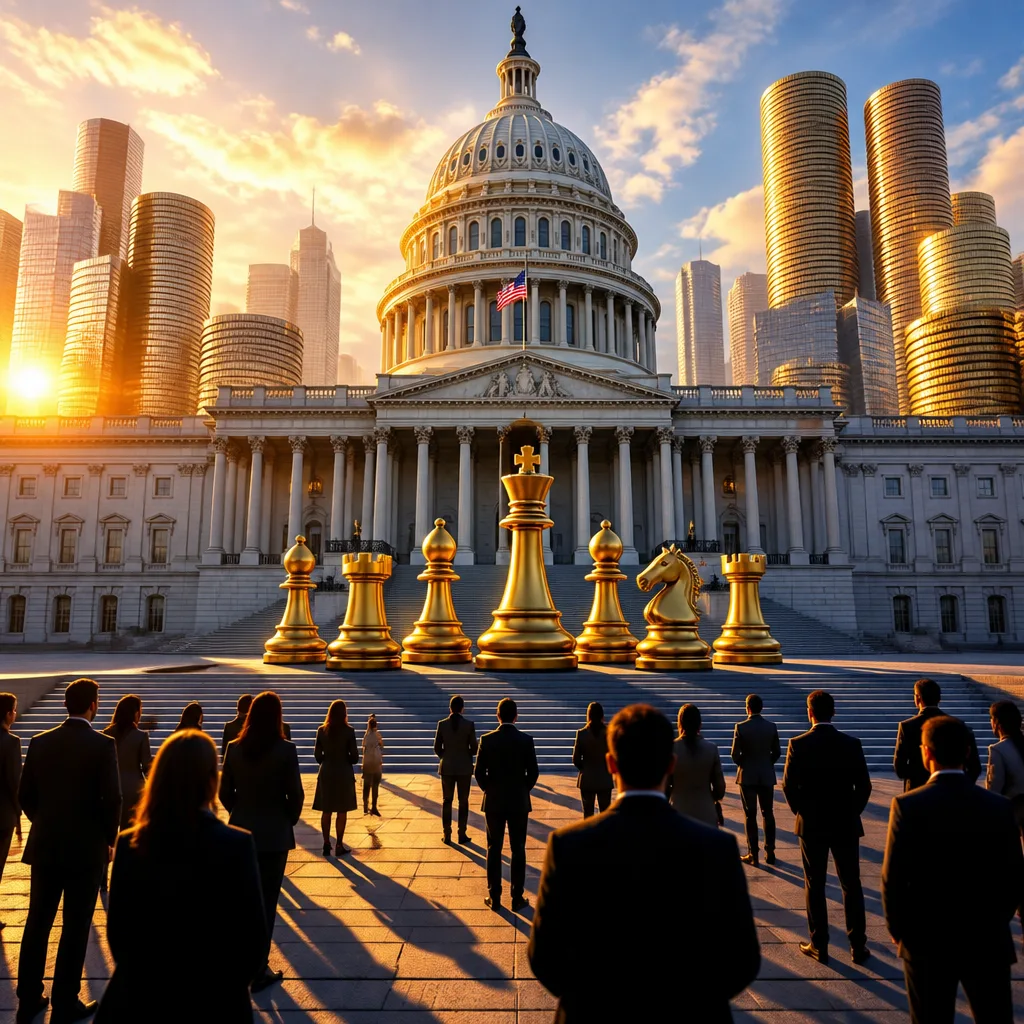
The United States risks drifting toward a system where wealthy, well-connected actors exert outsized influence on policy and political outcomes, scholars and commentators argued in a recent essay tracing parallels between modern American governance and the oligarchic rule the nation once rejected.
What the critics say
Commentators quoted academic voices and historical parallels to frame the problem as more than partisan disagreement: it is a structural tilt in which economic elites and organized interests routinely shape policy, often against the preferences of the majority.
"When a majority of citizens disagree with economic elites and/or with organized interests, they generally lose,"
That observation, attributed to political scientists Benjamin Page and Martin Gilens, was used to underscore the argument that concentrated economic power has become a decisive force in policy-making.
Historical echo and modern actors
Those advancing the critique draw a throughline from 18th-century grievances to present-day dynamics. They note that the Founders rebelled against concentrated, unaccountable power — and now, some contend, the U.S. increasingly resembles the oligarchic systems that once dominated Europe.
- Economic elites: Contemporary billionaires such as Elon Musk are cited as emblematic of actors whose financial sway and public influence shape policy debates.
- Longtime conservative donors: Figures like Charles Koch are invoked for their role in promoting tax and spending policies aligned with major policy shifts.
- Electoral risk: The piece warns of diminished accountability if economic elites persistently outflank majority preferences.
Policy consequences and electoral stakes
The authors link economic policy choices to political durability. They highlight that recent tax and spending changes have reflected elite preferences — pointing to debates over tax law and entitlement policy — and argue that such shifts can delegitimize democratic institutions if large portions of the electorate view policy as rigged in favor of the well-off.
The essay further suggests that the dynamic will be put to an acute test in upcoming national elections, with the 2026 contests and the 2028 presidential cycle singled out as inflection points. It also draws an international parallel, noting that voters in Hungary last year decisively rejected an authoritarian, corruption-plagued government as evidence that corruption and oligarchic capture can provoke electoral backlash elsewhere.
Scholarly context
Academics cited emphasize that the problem is not simply the presence of wealthy actors in politics — which is longstanding — but the structural capacity of economic elites and organized interests to mobilize resources in ways that consistently override majority preferences.
| Source/Voice | Claim |
|---|---|
| Priya Satia (Stanford) | America was founded in opposition to oligarchy; modern trends echo those dangers. |
| Benjamin Page & Martin Gilens | When majority preferences conflict with elite interests, elites usually prevail. |
What this means going forward
The essay poses a sober choice for voters and political actors: either confront the structures that enable concentrated influence, or accept a political order in which policies reflect elite priorities even when they diverge from majority desires. The argument does not prescribe specific remedies in the piece itself, but it frames the 2026 and 2028 cycles as tests of whether American voters will reassert democratic responsiveness.
Whether those elections will produce corrective outcomes — or reinforce the status quo — remains an open question. The analysis serves as a reminder that debates about taxes, campaign finance, regulatory power and institutional reform are not merely technocratic disputes but contests over who holds effective control in American democracy.