Wellumio said it has closed an oversubscribed US$9.75 million pre-Series A funding round to push its portable, AI-enabled MRI brain imaging system toward broader clinical testing and commercial deployment. The round adds international backers and new senior leadership as the company seeks to shorten the time to diagnosis for acute stroke.
Capital and international investors
The financing was led by Nuance Connected Capital and brought in two new international investors: Australia’s Bioshore Ventures and U.S.-based early-stage firm Jumpspace Ventures. Other participants included Icehouse Ventures, NZ Growth Capital Partners’ Aspire Seed Fund, Pacific Channel, Booster and Cure Kids Ventures. Angel investor groups Flying Kiwi and Enterprise Angels joined alongside retail investors through New Zealand’s Active Investor Plus programme and Snowball Effect.
- Amount: US$9.75 million (pre-Series A, final close)
- Lead investor: Nuance Connected Capital
- Notable new investors: Bioshore Ventures, Jumpspace Ventures
Product and clinical focus
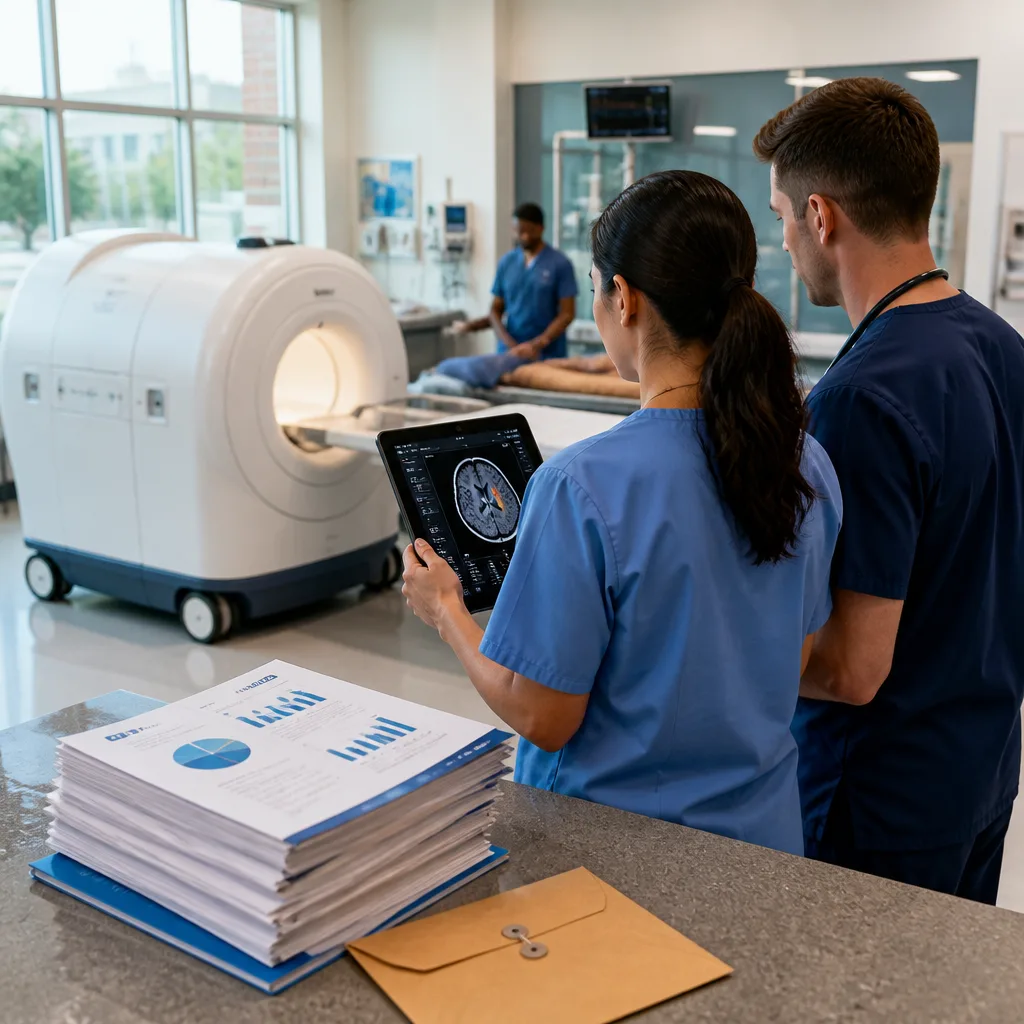
Wellumio’s device, called the Axana scanner, is described by the company as a portable, battery-powered brain imaging system that pairs magnetic resonance imaging with artificial intelligence to identify acute stroke at the point of care. The funding is earmarked to expand the company’s team and capabilities and to accelerate clinical, regulatory and commercial milestones across additional sites and geographies.
“Every minute counts in stroke care, yet only a small proportion of patients receive treatment within the ‘golden hour’, when timely intervention offers the best chance of reducing long-term disability,”
The company framed the investment as a means to quicken clinical validation and regulatory work and to leverage investor networks for international expansion. It also announced a leadership hire, naming Harry Marfatia as head of finance to support development, clinical studies and commercialization efforts.
Why this matters
Stroke treatment is highly time-sensitive: early detection and intervention can significantly reduce long-term disability. Conventional MRI machines are large, infrastructure-intensive and typically located in radiology suites, creating delays for patients who need immediate assessment. Wellumio’s strategy is to bring imaging closer to where patients present—emergency departments, ambulances or rural clinics—using a portable MRI unit enhanced with on-device AI interpretation to speed decision-making.
The investor mix signals cross-border interest in mobile imaging and acute care technologies. Lead participation by an established health-tech fund and the addition of Australian and U.S. investors broaden Wellumio’s commercial and regulatory pathways, which the company said will support expansion into new jurisdictions.
| Investor type | Examples |
|---|---|
| Lead investor | Nuance Connected Capital |
| International venture capital | Bioshore Ventures, Jumpspace Ventures |
| Local and angel investors | Icehouse, Flying Kiwi, Enterprise Angels, Snowball Effect |
Regulatory clearance and clinical validation remain the key hurdles for any imaging device that seeks broad clinical adoption. Wellumio’s public materials emphasize accelerating those milestones; the new financing and management hires are positioned to support that work. For clinicians and hospitals, the promise of rapid, decentralised imaging must still be proven in prospective studies and through regulatory review before it becomes routine practice.
As investors and medtech teams push portable imaging into acute care pathways, questions about workflow integration, reimbursement and comparative accuracy will determine whether devices like the Axana scanner move from pilot sites to standard care. The company has not disclosed timelines for regulatory submissions or broader commercial availability.
The funding round reflects investor appetite for technologies that address time-critical care gaps; whether portable MRI plus AI will reconfigure acute stroke pathways depends on forthcoming clinical evidence and the logistics of scaling medical imaging outside conventional settings.